
How Much Is Electrolysis? 2026 Price Guide by Area and Session
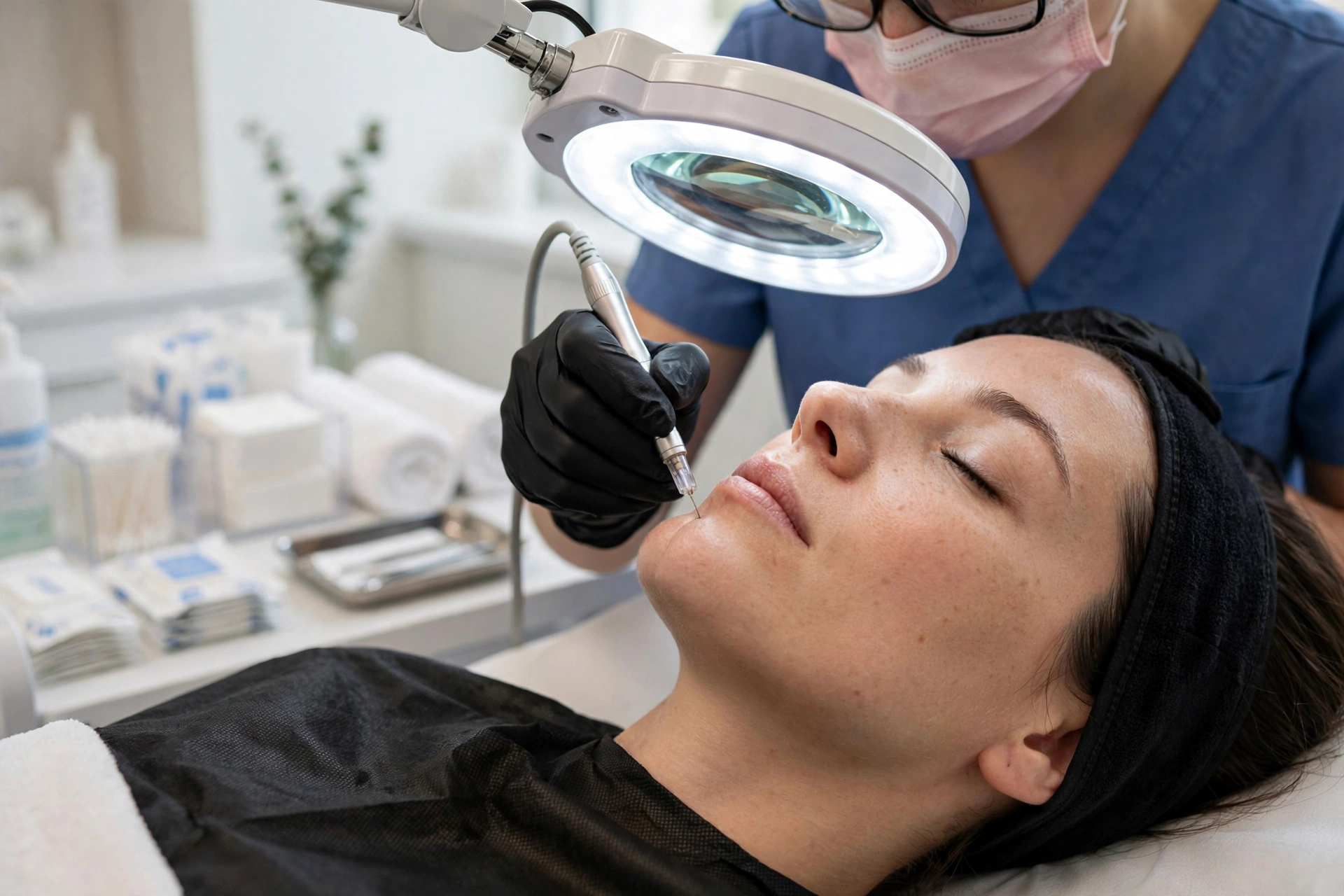
If you are tired of shaving every other day or paying for waxing appointments that never end, electrolysis may have crossed your mind. It is the only FDA-approved method of permanent hair removal, which makes it appealing. But before you book, you want the real numbers. So how much is electrolysis?
This guide breaks down electrolysis costs per session, per body area, and for a full treatment course, explains what drives the price up or down, and shows you honest ways to save money without compromising safety.
What Is Electrolysis, Briefly
Electrolysis uses a tiny probe inserted into each hair follicle to deliver a small electrical current that destroys the follicle’s ability to grow hair. Unlike laser hair removal, it works on all hair colors and all skin tones, including light blonde and gray hair that lasers cannot treat.
The tradeoff is that it treats one follicle at a time, so sessions take longer and you need multiple visits. That is exactly why the total cost depends so much on the area and your hair density.
How Much Is Electrolysis Per Session?
Most electrologists charge by time rather than by area. Typical rates in the US are:
- 15 minutes: 30 to 60 dollars
- 30 minutes: 50 to 100 dollars
- 60 minutes: 90 to 200 dollars
Small areas like the upper lip or chin are usually treated in 15 to 30 minute sessions. Larger areas like the underarms or bikini line may need full-hour sessions. Prices run higher in major cities like New York, Los Angeles, and Chicago, and lower in smaller towns.
Total Cost of a Full Treatment Course
Here is the part most people underestimate: one session is never enough. Hair grows in cycles, and electrolysis only works on hairs in the active growth phase. That means you need 15 to 30 sessions per area, spaced 1 to 2 weeks apart at first, then further apart as hair thins.
Total cost ranges for common areas:
- Upper lip: 500 to 1,200 dollars
- Chin: 500 to 1,500 dollars
- Eyebrows: 400 to 1,000 dollars
- Underarms: 800 to 2,000 dollars
- Bikini line: 1,000 to 2,500 dollars
- Full legs: 2,000 to 5,000+ dollars
Most people spend somewhere between 800 and 3,000 dollars for a complete course on one medium-sized area. Larger areas or very dense hair can cost more.
What Makes Electrolysis Cost More or Less
The Size of the Treatment Area
This is the biggest factor. More follicles means more time, more sessions, and a higher total bill. A small patch on the chin costs a fraction of full underarms.
Hair Density and Thickness
Coarse, dense hair takes longer per follicle than fine, sparse hair. Hormonal conditions like PCOS can cause denser growth that needs more sessions. An honest electrologist will tell you roughly how many sessions to expect at your consultation.
Your Location
Electrologists in big cities charge premium rates, sometimes double what you would pay in a smaller market. If you live near a city boundary, comparing prices across neighborhoods can save real money.
Provider Experience and Credentials
Board-certified electrologists (CPE credential) and those with years of experience charge more, but they also tend to work faster and cause less skin irritation. A cheaper, inexperienced provider who needs twice as many sessions can end up costing you more in the end.
Session Frequency Discipline
Skipping sessions or stretching them too far apart can add extra visits to your course, because hairs slip out of the treatable growth phase. Sticking to your schedule keeps the total count, and the total cost, as low as possible.
Electrolysis vs. Laser Hair Removal: Cost Comparison
Laser hair removal typically costs 200 to 500 dollars per session, with 6 to 8 sessions needed, for a total of 1,200 to 4,000 dollars. Electrolysis totals are often similar or lower for small areas, but laser is usually cheaper for large areas like legs because it treats many follicles at once.
The key difference is permanence claims. Electrolysis is FDA-cleared for permanent hair removal, while laser is cleared for permanent hair reduction. Laser also works best on dark hair against light skin. If you have light, red, or gray hair, electrolysis is often your only permanent option. The American Academy of Dermatology on hair removal options compares the methods in more detail.
Electrolysis vs. Waxing: The Long-Term Math
Waxing a single area every month at 50 to 80 dollars a visit costs 600 to nearly 1,000 dollars a year, forever. Over five years, that is 3,000 to 5,000 dollars with zero permanent result. Electrolysis for that same area might cost 1,000 to 2,000 dollars once, total.
This is the strongest financial argument for electrolysis: it is expensive up front but cheaper over a lifetime. If you are comparing temporary methods, also check how long your hair should be to wax so each waxing session at least gives good results.
Does Insurance Cover Electrolysis?
Usually not, because it is considered cosmetic. The main exception is when electrolysis is medically necessary, such as hair removal before certain gender-affirming surgeries or reconstructive procedures. In those cases, some insurance plans do cover it with a doctor’s referral. It never hurts to ask your provider and your insurer.
How to Save Money on Electrolysis
Buy Package Deals
Many electrologists offer discounts of 10 to 20 percent when you prepay for a block of sessions. If you are committed to the full course, packages are almost always cheaper than paying session by session.
Ask About New-Client Specials
Studios often discount the first session or consultation to attract new clients. A consultation should ideally be free or low-cost, and it gives you a chance to assess the provider before committing.
Consider Electrology Schools
Students training to become electrologists need practice clients and charge much lower rates, usually under supervision. This is a legitimate way to cut costs if you are comfortable with a supervised trainee.
Do Not Over-Treat
Ask your electrologist for a realistic session estimate up front, and track your progress. Once an area is clear and stays clear through a full hair growth cycle, you are done. Some providers upsell maintenance sessions you do not need.
Keep Your Schedule Tight
As mentioned above, consistent scheduling reduces the total number of sessions. Set reminders and treat appointments like any other commitment.
What to Expect at Your First Appointment
A good first visit starts with a consultation: your electrologist examines the area, discusses your hair and skin type, explains the method they use (galvanic, thermolysis, or blend), and gives you a cost and session estimate. The actual treatment involves a fine probe sliding into each follicle. Most people feel a slight stinging or heat sensation, and topical numbing cream is available for sensitive areas.
Afterward, expect mild redness for a few hours and possibly tiny scabs if your skin is sensitive. Avoid sun exposure, makeup on the treated area, and heavy sweating for 24 hours. For a medical perspective on the procedure itself, see Mayo Clinic’s overview of electrolysis.
Red Flags: When a Deal Is Too Good
Electrolysis requires sterile, single-use probes and proper training. Be cautious of providers who reuse probes, skip consultations, promise results in just a few sessions, or pressure you into large prepayments before you have tried a session. A legitimate electrologist will be transparent about pricing, credentials, and realistic timelines.
The Bottom Line
So, how much is electrolysis? Plan on 30 to 200 dollars per session depending on length, and 800 to 3,000 dollars total for a full course on a typical area. It is one of the pricier hair removal options up front, but it is also the only truly permanent one, which makes it the cheapest option over a lifetime. Get a consultation, compare a few providers, and commit to the schedule. And while you are waiting for permanent results, everyday grooming habits that keep you looking polished help you look your best between sessions.



