
5G vs 5G Ultra Wideband: What’s the Real Difference?
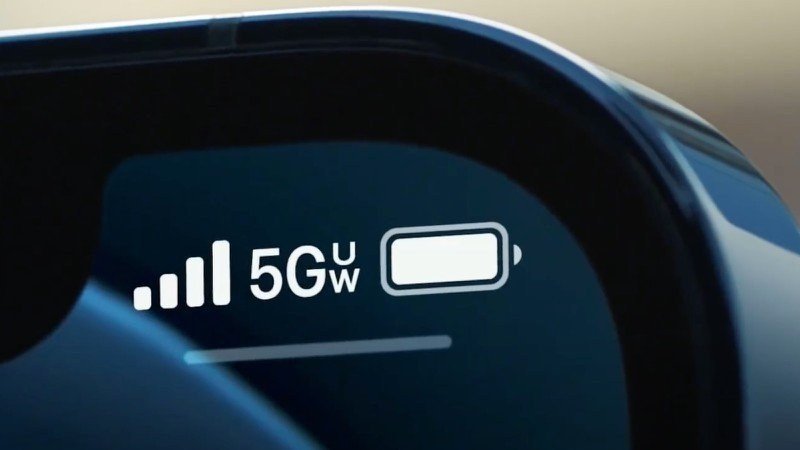
See that little ‘UW’ next to the 5G icon on your phone and wonder what that UW badge means? The difference between 5G and 5G Ultra Wideband is one of the most confusing bits of carrier marketing — partly because the carriers all use different names for the same underlying technology.
Here’s the plain-English version: ‘5G’ is the basic flavor, and ‘Ultra Wideband’ (or 5G+, or 5G UC, depending on your carrier) is the fast flavor. Let’s break down what that means for your actual speeds.
The short answer: regular 5G (low-band) is only slightly faster than 4G LTE but covers huge areas. 5G Ultra Wideband uses mid-band and high-band (mmWave) spectrum for dramatically faster speeds — often 300 Mbps to 1+ Gbps — but covers smaller areas, mostly cities and dense suburbs.
What Is the Difference Between 5G and 5G Ultra Wideband?
It comes down to radio spectrum — the invisible lanes carriers use to send data. Regular ‘5G’ runs mostly on low-band spectrum, the same frequencies as 4G LTE. It travels far and penetrates buildings well, which is why carriers could roll it out nationwide quickly. The catch: it’s barely faster than good LTE. If your speed test shows 30–80 Mbps on basic 5G, that’s normal — you’re getting better capacity and latency, not a speed revolution.
Ultra Wideband is the umbrella term Verizon uses (AT&T calls it 5G+, T-Mobile calls it 5G UC for ‘Ultra Capacity’) for the faster spectrum: mid-band (C-band) and mmWave. Mid-band is the sweet spot — speeds of 200–600 Mbps with decent range, now covering most US cities and suburbs. mmWave is the extreme: 1+ Gbps speeds, but the signal barely goes a city block and can’t penetrate walls, so you’ll mostly find it in stadiums, airports, and dense downtown areas.
- Regular 5G (low-band): 30–100 Mbps, nationwide coverage, similar to LTE
- Ultra Wideband mid-band (C-band): 200–600 Mbps, cities and suburbs
- Ultra Wideband mmWave: 1+ Gbps, very short range, stadiums and downtown
- Carrier names: Verizon ‘UW’, AT&T ‘5G+’, T-Mobile ‘5G UC’ — same idea
Does It Matter for Your Phone Bill?
For most people, Ultra Wideband access is included automatically on current unlimited plans — Verizon, AT&T, and T-Mobile all bundle it into their standard unlimited tiers now. Older or budget plans might limit you to basic 5G, so check your plan details if you never see the UW/UC icon. Prepaid and MVNO plans (Mint, Cricket, Visible) vary: some include it, some don’t.
Practically speaking, mid-band Ultra Wideband is the first version of 5G that feels like an upgrade — downloads finish noticeably faster, video calls are rock solid, and congested areas (concerts, airports) stay usable. If you’re choosing between plans, UW/UC access is worth having. But don’t pay a big premium just for mmWave bragging rights; you’ll rarely connect to it in daily life.
Does 5G Drain Your Battery Faster?
Yes, somewhat — especially mmWave, which makes your phone’s radio work hard. If your phone battery drains fast and you’re in a strong Ultra Wideband area, the 5G radio can be part of the story. Both iPhone and Android have a ‘5G Auto’ mode that drops to LTE when 5G isn’t needed, and it’s the smart default — you keep the speed when it matters and save battery the rest of the time.
You can also force LTE-only in settings if battery life matters more than speed to you. On iPhone: Settings > Cellular > Cellular Data Options > Voice & Data > LTE. On Samsung: Settings > Connections > Mobile networks > Network mode. It’s a legitimate trade-off, not a defect — use 5G where it’s fast, LTE where it isn’t.
What About Home Internet Over 5G?
The same Ultra Wideband spectrum powers the 5G home internet plans from Verizon, T-Mobile, and AT&T ($35–$70/month). For many households, it’s a genuine alternative to cable — mid-band speeds of 100–300 Mbps handle streaming, remote work, and gaming fine. The catch is consistency: speeds vary with tower congestion and your exact location, and some plans deprioritize during peak hours.
It’s worth considering if your cable options are slow or overpriced, and most carriers offer 30-day trials. Just test it during your actual usage hours — a speed test at 2 a.m. tells you nothing about 7 p.m. performance. And if your house has rooms where even the gateway struggles, the same Wi-Fi dead zone fixes apply to the 5G gateway’s Wi-Fi signal too.
What Is the Difference Between 5G and 5G Ultra Wideband for Rural Users?
If you live outside the suburbs, here’s the honest picture: Ultra Wideband’s fast mid-band spectrum is primarily a city and suburb technology, and rural rollout is slow because the economics are tough. What rural users mostly get is low-band 5G — better coverage and capacity than LTE, but similar speeds. Check your carrier’s coverage map with your actual address, not just your ZIP code, because rural coverage varies street by street.
The practical advice: don’t choose a carrier or plan based on Ultra Wideband if you rarely visit cities — choose based on who has the best basic coverage where you live and work. Ask neighbors what works; rural coverage knowledge is hyper-local and carrier maps are optimistic. And for home internet in areas with decent 5G but no cable or fiber, 5G home internet gateways are genuinely worth trying — many rural households get 50–150 Mbps, which beats old DSL by miles, with free 30-day trials to verify.
Related reading: why does my phone say no service in certain areas
The Bottom Line
Basic 5G is nationwide but only marginally faster than LTE; Ultra Wideband (UW/5G+/5G UC) is the genuinely fast version, with mid-band delivering 200–600 Mbps across most cities. It’s included in most current unlimited plans, it’s worth having, and ‘5G Auto’ mode gives you the speed without the battery penalty. Don’t overpay for mmWave — you’ll rarely use it.
Sources: FCC’s guide to 5G and spectrum · CNET’s 5G UW vs 5G UC explainer







1 thought on “5G vs 5G Ultra Wideband: What’s the Real Difference?”