
How to Make Homemade Salad Dressing That Lasts
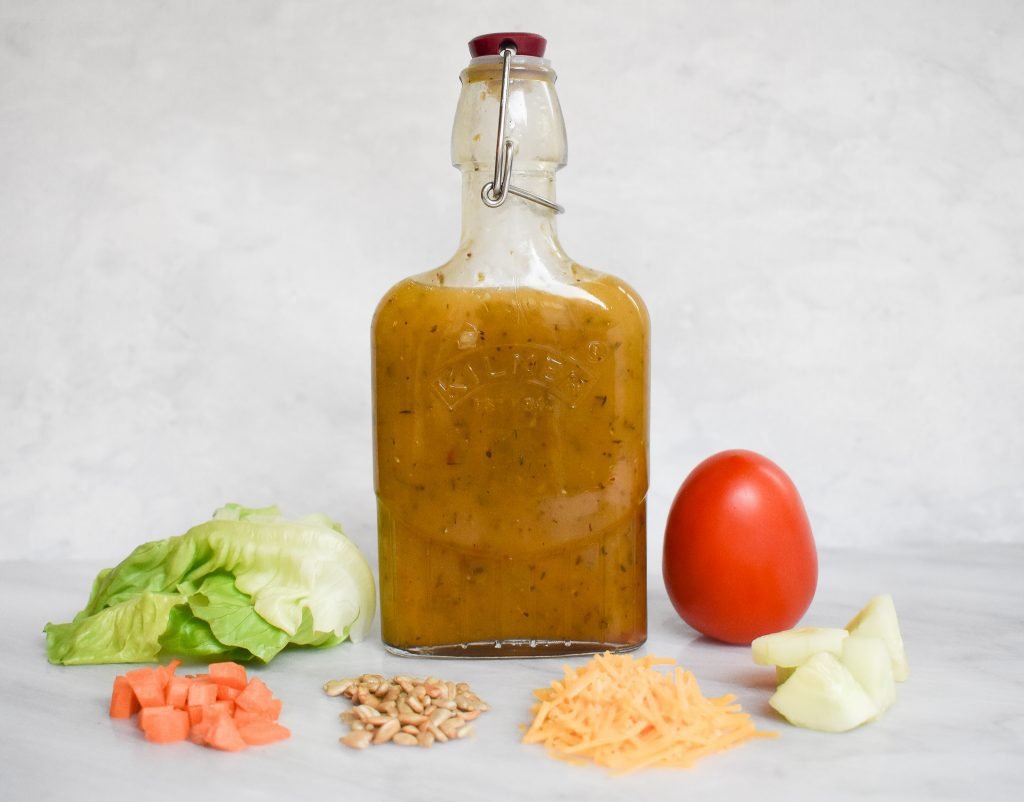
Bottled salad dressing is one of the easiest things to replace with homemade, and once you do, it is hard to go back. Store-bought dressings are expensive for what they are, full of preservatives and stabilizers, and they all taste vaguely the same. Homemade dressing takes about three minutes, costs a fraction of the price, and tastes brighter and fresher. The only real question is how to make homemade salad dressing that lasts, because nobody wants to whisk up a new batch every single night.
The answer is that most homemade dressings keep beautifully for one to two weeks in the fridge. You just need the right formula and the right storage.
How Do I Make Homemade Salad Dressing That Lasts?
The Master Ratio
Almost every vinaigrette follows the same skeleton: three parts oil to one part acid, plus seasoning. That is it. Olive oil and red wine vinegar with salt, pepper, and a spoonful of Dijon mustard will carry you through most salads in life. The mustard is doing quiet work here beyond flavor; it is an emulsifier that helps the oil and vinegar stay combined instead of separating into layers.
From that base, the variations are endless. Swap the vinegar for lemon juice, balsamic, or apple cider vinegar. Swap the olive oil for avocado oil or walnut oil. Add a crushed garlic clove, a spoonful of honey, fresh herbs, or a pinch of red pepper flakes. Each change takes seconds and produces a genuinely different dressing.
Creamy Dressings Without the Bottle
For ranch-style or Caesar-style dressings, the base changes but the principle does not. Greek yogurt, mayonnaise, or sour cream thinned with a little milk or lemon juice gives you a creamy dressing base in a minute. A classic simple Caesar is mayonnaise, lemon juice, grated parmesan, Worcestershire sauce, garlic, and black pepper, whisked together. It takes three minutes and beats the bottled version easily.
How Long Does Homemade Dressing Keep?
This depends on the ingredients:
- Oil-and-vinegar dressings: two to three weeks refrigerated. The acid is a natural preservative.
- Dressings with fresh garlic or herbs: about one week. Fresh aromatics are the limiting factor.
- Creamy dressings with dairy or eggs: one week, and keep them cold the whole time.
- Dressings with mustard or honey: these last on the longer end, since both are natural preservatives.
The one thing to avoid is leaving dressing at room temperature for hours. Olive oil solidifies in the fridge, which alarms first-timers, but it is completely normal. Just let the jar sit on the counter for ten minutes or run it under warm water, then shake.
Storage Tips That Make It Effortless
Mix your dressing directly in a mason jar or any jar with a tight lid. Add all the ingredients, seal, and shake. No whisk, no bowl to wash. Make a double batch on Sunday and you have dressing all week. Label the jar with the date using masking tape so you always know where you stand.
One caution: dressings with fresh ingredients follow the same rules as any fresh food, so the principles behind telling whether leftovers are still safe apply here too. When in doubt, the one-week mark for anything with fresh garlic, herbs, or dairy is the safe line.
Five Dressings Worth Memorizing
Classic vinaigrette: olive oil, red wine vinegar, Dijon, salt, pepper. The workhorse.
Lemon herb: olive oil, lemon juice, minced garlic, chopped parsley, salt. Bright and fresh.
Balsamic: olive oil, balsamic vinegar, honey, Dijon. Sweet, tangy, great on hearty greens.
Quick Caesar: mayo, lemon juice, parmesan, Worcestershire, garlic, pepper. No raw eggs needed.
Asian-inspired: sesame oil, rice vinegar, soy sauce, honey, grated ginger. Excellent on slaw and noodle salads.
Fresh herbs make an enormous difference in all of these, which is one more reason to learn how to keep herbs and spices fresh longer. And a good dressing is what turns a pile of vegetables into a meal, so pair these with vegetarian dinners even meat lovers enjoy for full meatless dinners that satisfy.
For more formula variations, Serious Eats has a great vinaigrette science breakdown, and The Kitchn covers mason-jar dressing methods.
Beyond Vinaigrette: Dressing Styles Around the World
Every cuisine has its signature dressing logic, and borrowing them keeps salads interesting for months. Japanese-style: soy sauce, rice vinegar, sesame oil, and a touch of sugar. Middle Eastern: tahini thinned with lemon juice and water, garlic, and salt; creamy, nutty, and excellent on grain bowls. French bistro: shallot, Dijon, red wine vinegar, and walnut oil. Thai-inspired: fish sauce, lime juice, a pinch of sugar, and chili. Mexican: lime, cumin, olive oil, and chopped cilantro. Each follows the same acid-fat-seasoning skeleton with different accents, which means once you understand the formula, you can improvise endlessly.
Fixing Broken or Bland Dressings
Dressings separate; that is normal, not failure. A vigorous shake usually re-emulsifies a vinaigrette. If it will not come together, whisk in another teaspoon of Dijon or a few drops of water while whisking. Too acidic? Add more oil or a pinch of sugar or honey. Too oily? More acid. Bland? It almost always needs more salt; add a pinch, taste, repeat. Too thick? Thin with water a teaspoon at a time. Dressing is one of the most forgiving things you can make because every problem has an immediate, tastable fix. Make it, taste it, adjust it, and trust your palate over the recipe.
Dressing FAQs
Why did my dressing separate? That is normal physics, not failure. Oil and vinegar separate without an emulsifier; shake vigorously before each use, or whisk in a teaspoon of Dijon mustard to help it hold.
Can I freeze homemade dressing? Vinaigrettes freeze acceptably, though the texture changes slightly. Creamy dairy-based dressings do not freeze well; they tend to split.
Why did my olive oil solidify in the fridge? Olive oil naturally solidifies below about 50 degrees. It is completely normal and reverses at room temperature. Let the jar sit out ten minutes and shake.
How do I know when dressing has gone bad? Off smells, visible mold, or a significantly changed color. When in doubt, the one-to-two-week guidelines above are your answer.
Can I use dried herbs instead of fresh? Yes, at about one-third the quantity. Dried herbs also extend the dressing’s fridge life since they introduce less moisture.
The takeaway: three parts oil, one part acid, seasoning, shake in a jar. Make it Sunday, eat well all week, and wonder why you ever paid four dollars for a bottle of the stuff.






